Does it matter which celestial pole I use to polar align my tracker?
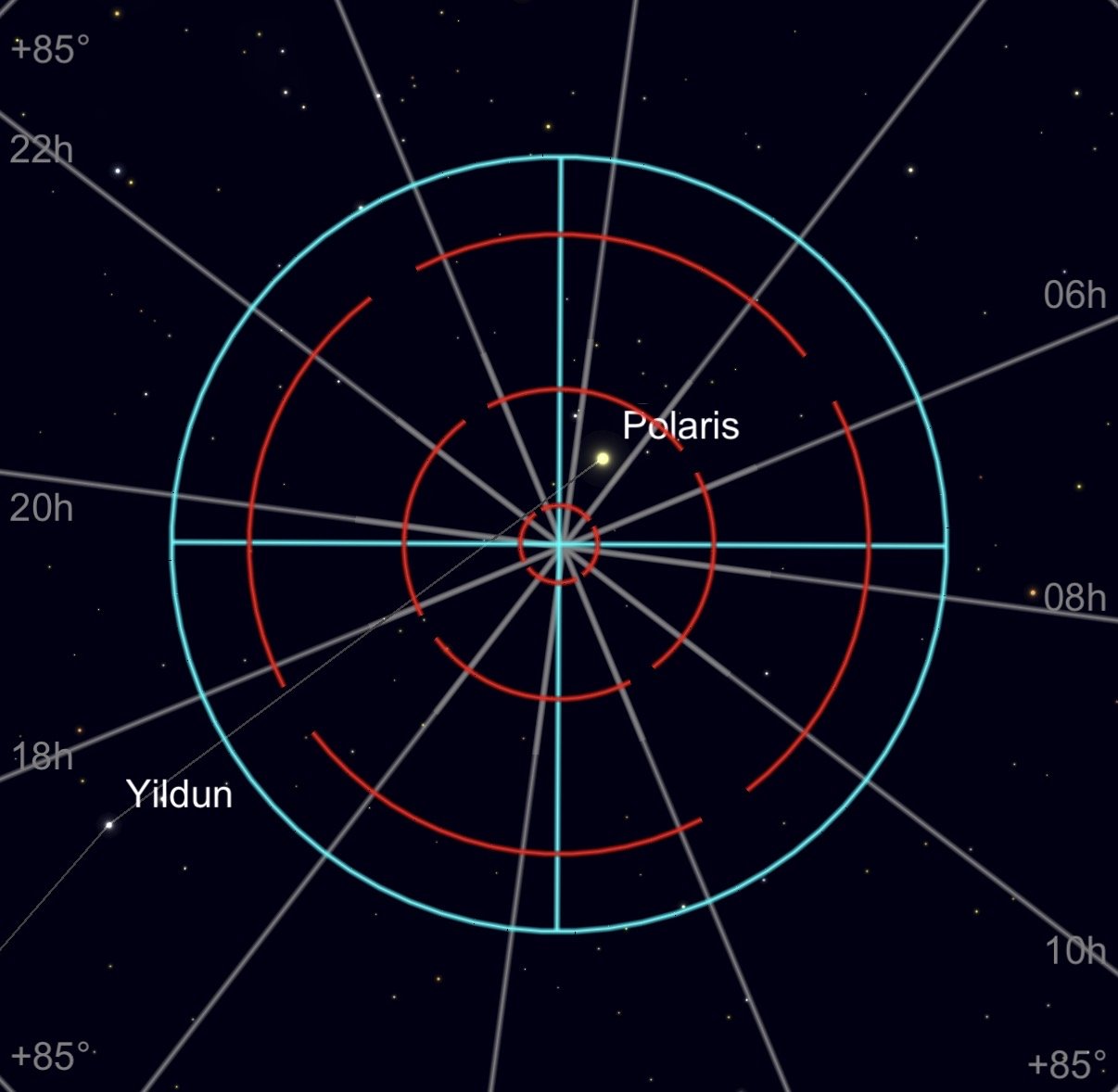
Simple answer, no………
Probably best if I give a bit more detail.
One of the most common questions I have been asked about using the phone holder and and a phone app to polar align the Nomad (or any other tracker) is “could I make one that will work in the northern hemisphere?”, or “will it work in the northern hemisphere” (or the southern hemisphere for those who wrongly assume I live north of the equator). The simple answer is it makes no difference which hemisphere you are in, it will work fine as long as you understand what you are actually trying to do.
A lot of the misconceptions I think comes from the idea that we are alining the tracker with Polaris or some other arbitrary object in the sky. What we are really doing is trying to align the axis of rotation of our tracker with the axis of rotation of the earth. Now this misunderstanding is quite reasonable given that in the Northern hemisphere we have a handy star Polaris which is quite close (but not actually on) the the northern celestial pole and so if we use a laser to align our tracker axis with it we are very close to being aligned with the earths rotational axis.
Let me try to explain with some diagrams.
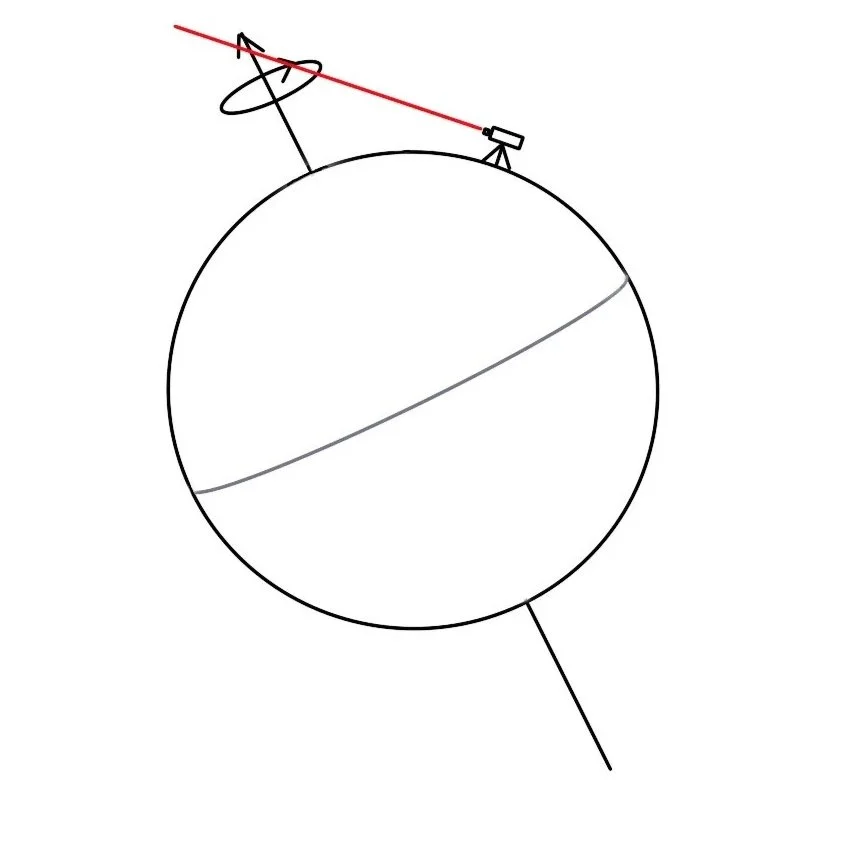
If we sit our camera pointing at the horizon or just at a random spot of the sky, as the earth rotates the point of view of the camera sweeps across the sky blurring the stars for all but relatively short exposures. This is what we see in beautiful star trail images, but not that helpful if we want clear images of the night sky using exposures over 15 seconds or so (depending on the focal length of your lens).
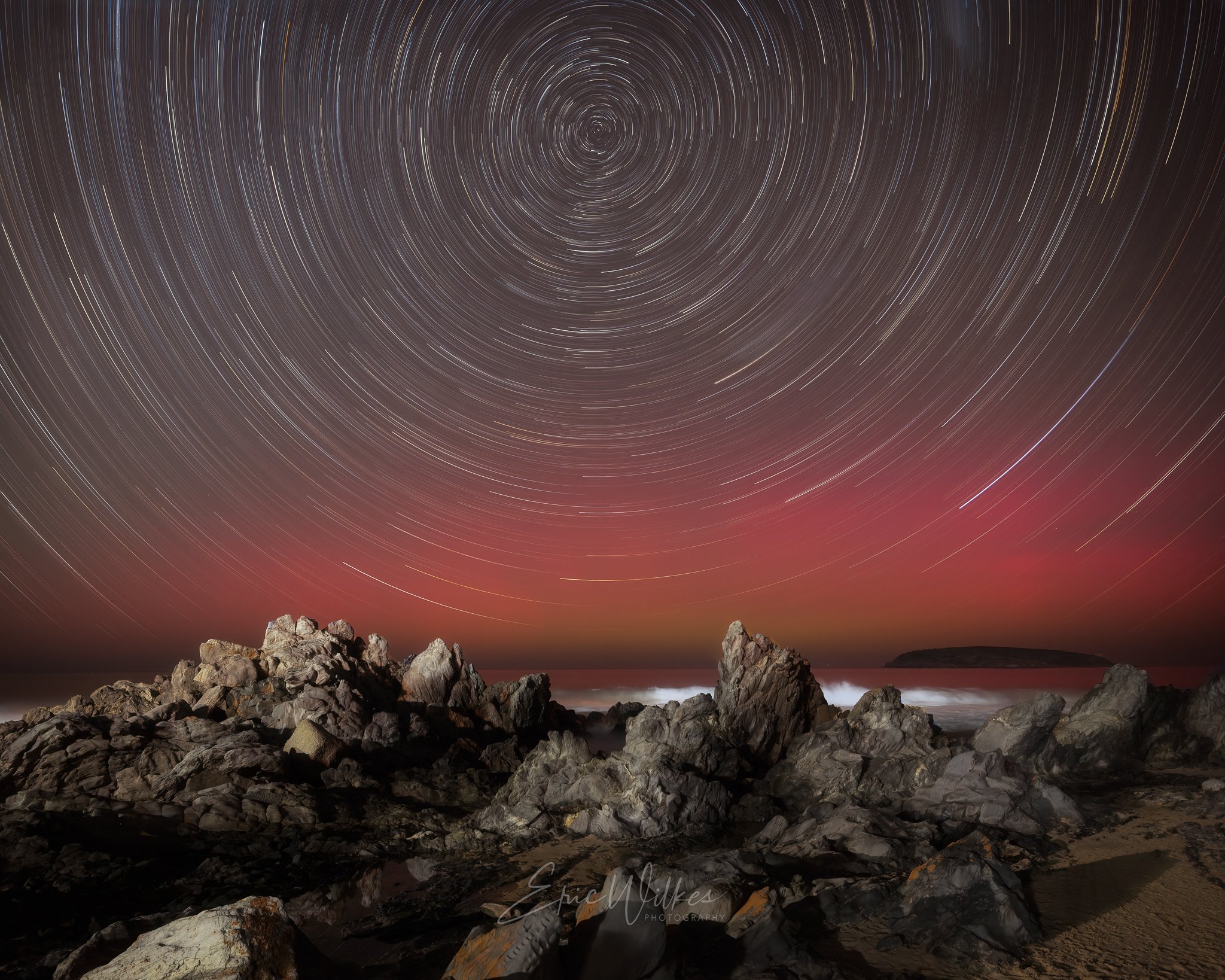
The motion of the stars around the celestial pole (in this case with some Aurora Australis for good measure)
To solve this we need to counteract the spin of the planet (stopping the spin would prove problematic). We do this by putting a tracker between our camera and planet earth. We can then point the axis of the tracker at the nearest celestial pole which effectively aligns it with the earth’s rotational axis (the celestial pole is not the same as the North or South Pole, they are on the ground. The celestial poles are the points in the sky which all the stars seem to rotate around).
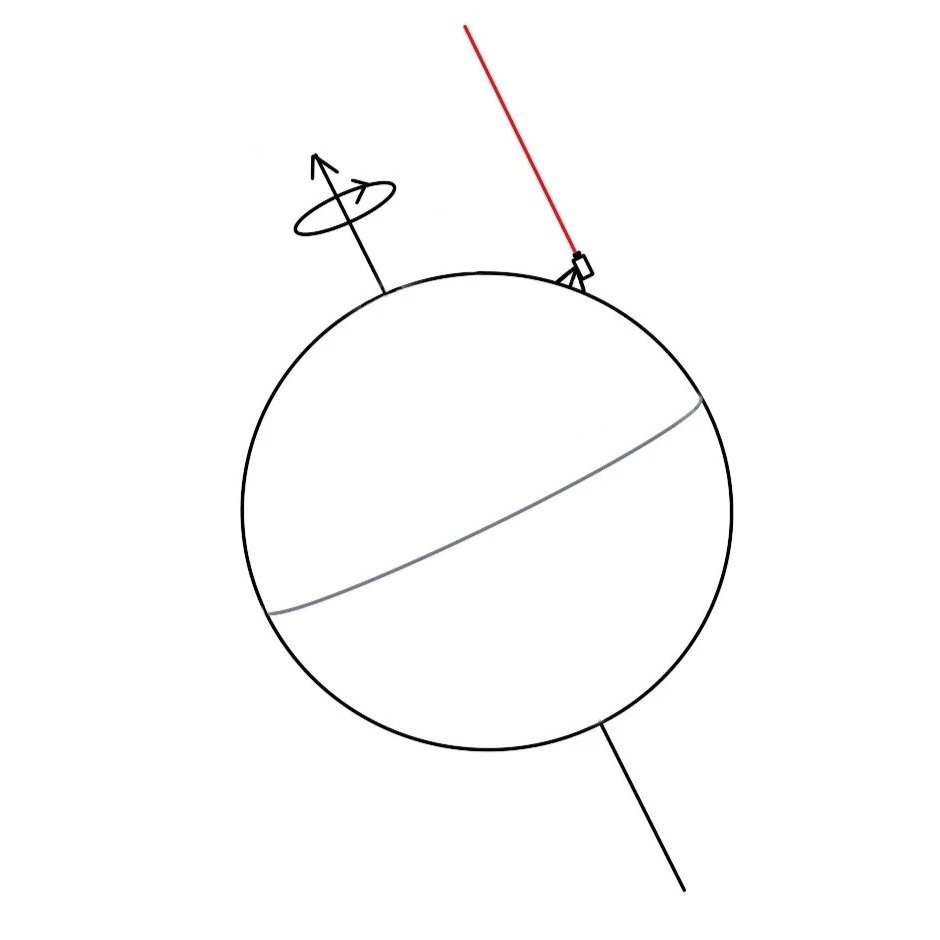
Now when we turn the tracker on it slowly spins along its axis in the exactly opposite direction and speed as the earth, cancelling out the star motion in our images (but making the foreground blurry, you cannot have everything).
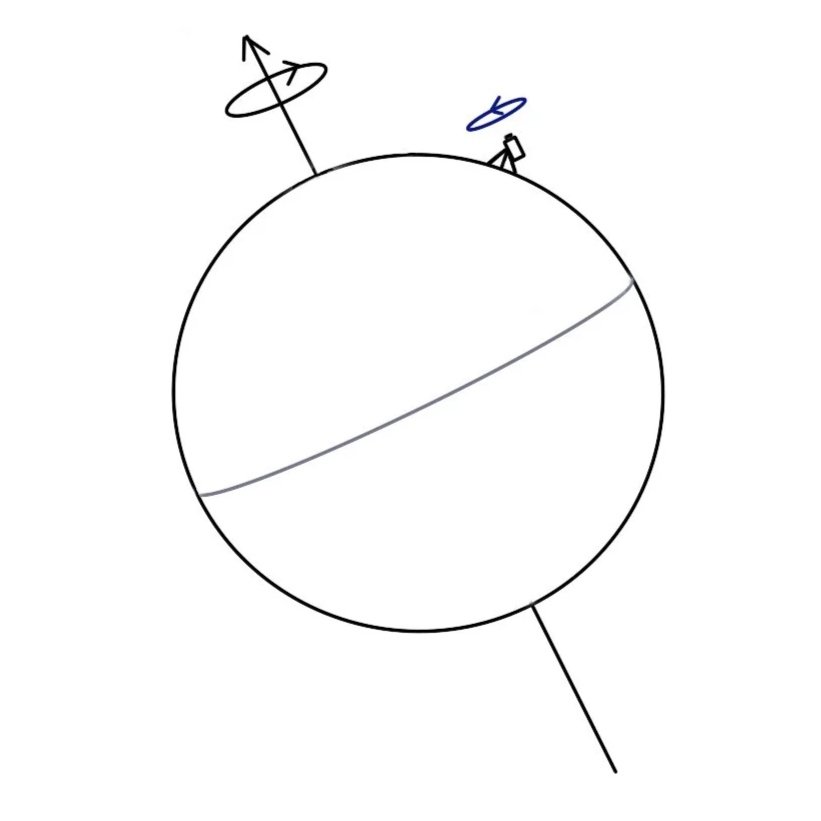
So what has this got to do with polar aligning using the celestial pole opposite to the hemisphere you are in. If you think about it, because we are just trying to align the trackers axis with the earths axis we can (as long as the tracker is itself is pointing in the right direction i.e. towards the local celestial pole) use the opposite celestial pole in exactly the same manner.
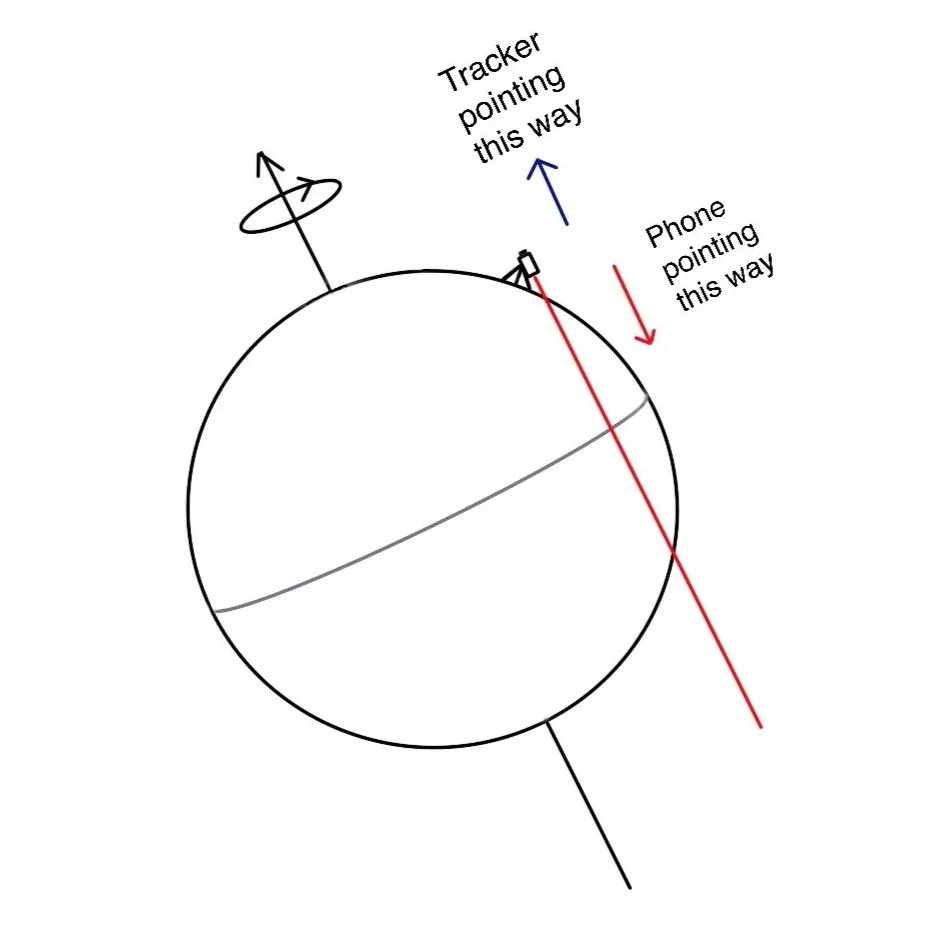
This means that we do have the odd experience of aligning the tracker not using something in the sky above us, but through the earth at our feet. We end up with the phone polar aligning with the opposite pole, and the tracker pointing at your local pole. But that's fine because everything is parallel to the earths axis of rotation and the tracker can now counteract that movement resulting in fixed stars.
It is important to remember here that we are not using the phone’s cameras to align anything, just the phone’s compass (to point true North or South), the inbuilt GPS (to tell us our latitude) and the inbuilt inclinometer (to tell us the angle of elevation). Luckily apps like Sky Safari and Photopills pull all this together for us so we can find what we are pointing at. So if you are using Photopills you just need to get used to seeing an image of the ground as you polar align.
So why do it this way? Mostly for simple and selfish reasons.
It is easier to have the phone sitting in a cradle with the screen pointing up at you and with gravity keeping it there. Now we can stand above and look down on the phone. The phone is now aligning with the opposite pole but the tracker is still aligned with your local pole.
If the phone cradle was pointing in the same direction as the tracker (your local pole) it would fall out of the holder and you would need to squat and look at it from below. This is hard on your knees and back!
And that is about it. Simple really. If you are using a phone holder like the one I designed or something similar you just align on the the celestial pole opposite to the hemisphere you are in. No need for anything different for North or South.
Have a look at some of my earlier blogs on setting up the apps and some of the things that can interfere with polar alignment using phones.
Hope this has been useful and as always let me know if there are any suggestions. Please share the information with anyone who asks, a little knowledge can go a long way.